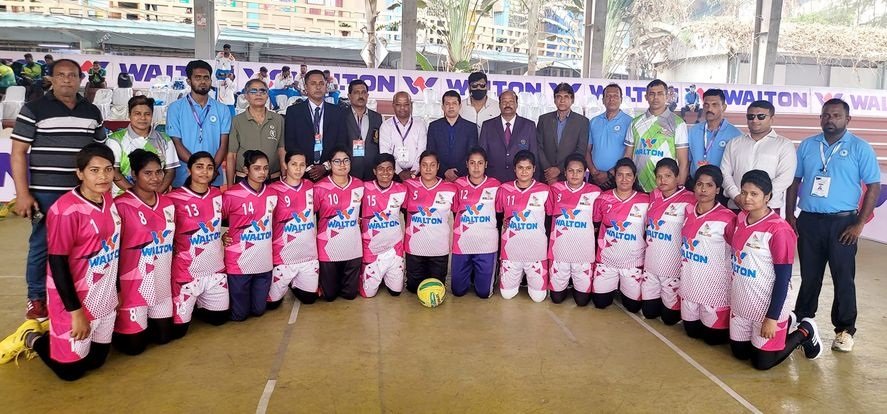
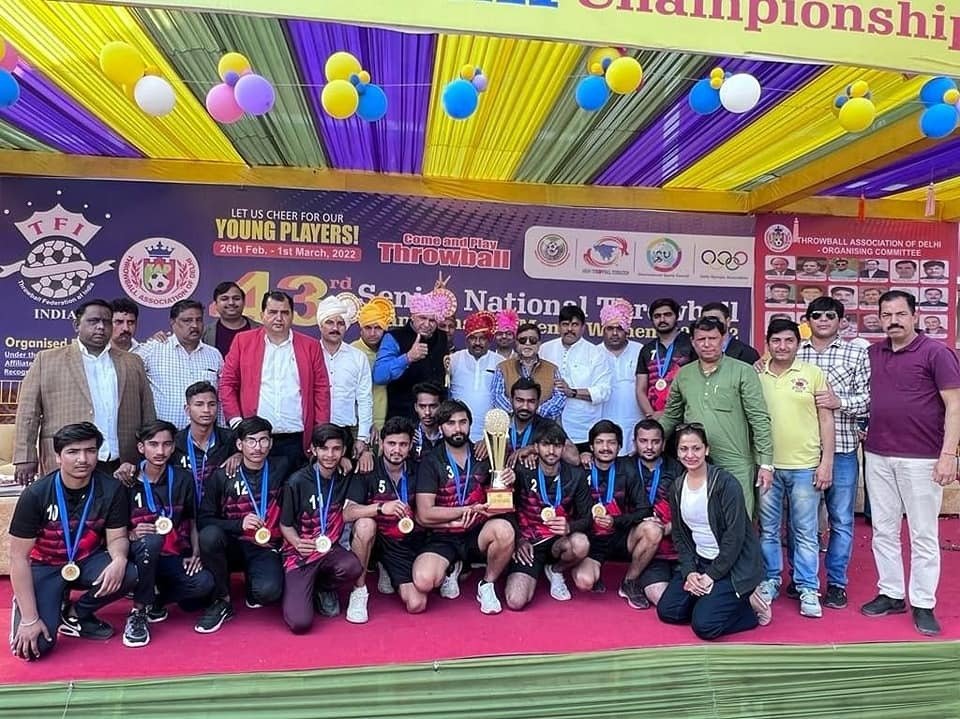
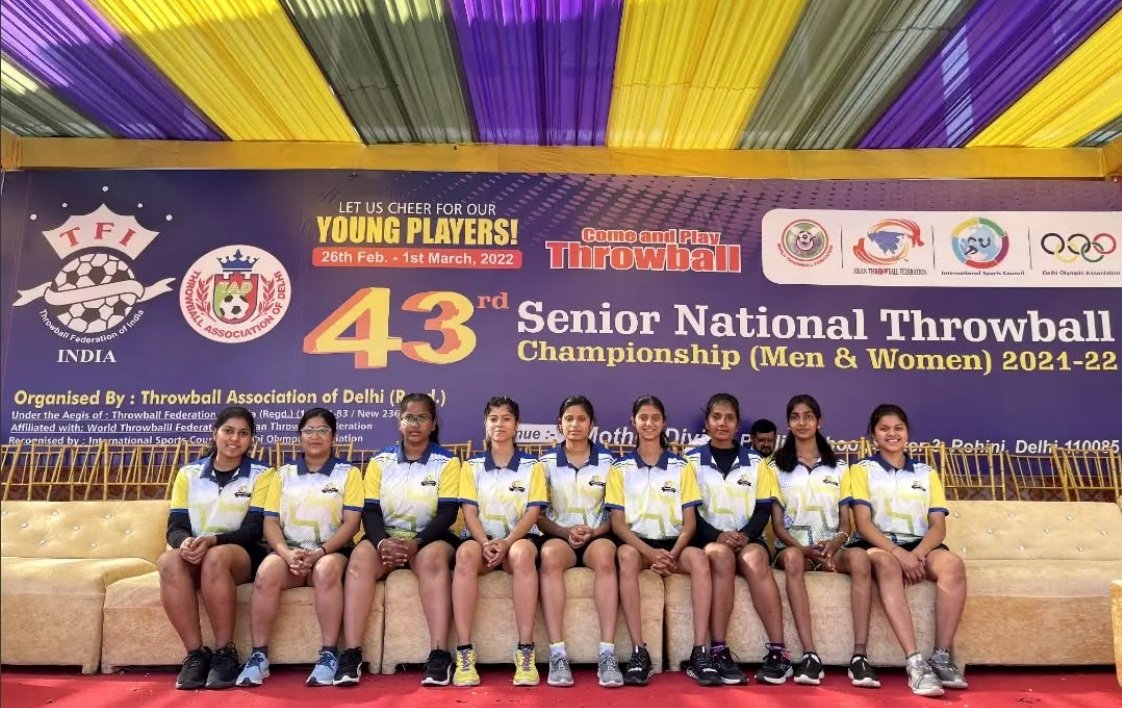
Throwball, a captivating non-contact ball sport played between two teams of nine players each, has a rich history that dates to the early 20th century. It owes its inception to the innovative vision of Dr. Harry Crowe Buck, a pioneering figure in Scientific Physical Education in India and the esteemed founder of the YMCA’s College of Physical Education in Madras, circa 1920.
In 1925, Mrs. Buck, the wife of Dr. Harry Crowe Buck, played a pivotal role in introducing the game of Throwball in Madras, primarily targeting the older demographic. The game’s appeal lay in its accessibility, requiring minimal technical skill and physical exertion, making it an ideal recreational pursuit.
While its origins in India are well-documented, Throwball’s roots trace back to similar games popular among women in England and Australia during the 1930s. The sport found its way to the Y.M.C.A. College of Physical Education in Chennai, India, where it gained prominence as a women’s sport in the 1940s. Dr. Harry Crowe Buck further propelled the game’s development by formalizing its rules and regulations in 1955, cementing its status as a staple in school games for girls across India until the 1960s.
The momentum behind Throwball’s growth surged in 1978, with the establishment of the Throwball Federation of India by Prof. Jagat Singh Chauhan, a notable figure in the sports landscape of Haryana, India, and the founder of the Handball Federation of India. The federation’s formation heralded a new era of organized competition, with state associations from Haryana, Gujarat, Uttar Pradesh, Madhya Pradesh, Maharashtra, Delhi, Punjab, and Rajasthan collaborating to promote and develop the sport nationally and internationally.
A significant milestone arrived with the inaugural National Throwball Championship in Jind, Haryana, in 1978, under the leadership of Mrs. Shashi Prabha. This event marked the ascension of Throwball on the national stage, with Delhi emerging as the victor in the men’s category. Coaching initiatives, such as those led by Mrs. Zineeth Fernando of Colombo, Sri Lanka, in 1982, further elevated India’s proficiency in the sport, culminating in successful tours and international engagements.
The Throwball Federation of India attained official recognition under the Societies Registration Act in 1982 under the leadership of Late Mr. Jagat Singh Chouhan and Mr. Jawahar Lal Khurana who both works in Sir Chhotu Ram Polytechnic in Rohtak, Haryana, India, setting the stage for increased institutional support and acknowledgment. Subsequent endorsements from the Ministry of Sports, Government of India, in 1989, and inclusion in the School Games Federation of India’s sports calendar in 2000, propelled Throwball into mainstream recognition and popularity nationwide.
In 2001, a landmark achievement was realized when the Indian Olympic Association granted recognition to the Throwball Federation of India, solidifying its status as a legitimate sporting entity. With a steadfast commitment to furthering its reach and impact, the federation’s vision encompasses inclusion in inter-university sports activities and the esteemed National Games.
Since its inception, Throwball has transcended age and gender barriers, becoming a beloved pastime for men, women, and children alike. With each passing year, the sport’s trajectory continues to soar, fueled by the passion and dedication of its enthusiasts and stakeholders across the nation.